Lived-In Elegance: Why UK Homes Are Leaving the Show-Home Look Behind in 2026

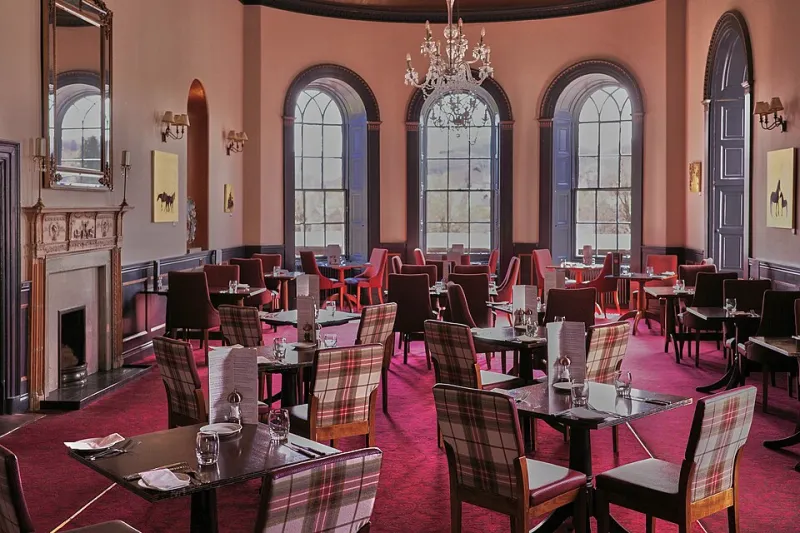
Photo: Andrew Wood, CC BY-SA 2.0, via Wikimedia Commons
Something has shifted in the way UK homeowners want their rooms to feel. For years, the dominant look was polished to the point of perfection: crisp cushions, empty surfaces, a colour palette so carefully controlled it looked curated by a stylist. It photographed beautifully. It also had a habit of making guests ask whether they should take their shoes off, or whether they were allowed to sit down at all.
In 2026, the mood is moving. The most interesting rooms are not the ones that look untouched. They are the ones that look considered, layered and genuinely lived in. Call it welcoming polished: the sweet spot between a room that has been thought through and a room that has been lived in. It is not an excuse for clutter, and it is not a rejection of good design. It is a more grown-up idea of what a beautiful home actually is.
The Problem With Perfect
The show-home look has its place. It sells developments, it makes magazine covers, and it can be a useful starting point. But as a long-term way of living, it can leave a room feeling a little cold. When every surface is clear and every cushion is karate-chopped, there is nowhere for real life to land. Guests perch rather than settle. The room looks finished, but it does not feel ready.
We have seen this in real UK homes: a beautiful new-build in Bristol with a grey palette so controlled that the family's books and toys were hidden away whenever visitors came; a period terrace in Leeds with a formal dining room that was only used at Christmas because it felt too precious for a Tuesday night. In both cases, the design was not the problem. The lack of invitation was.
What Welcoming Polished Looks Like
Welcoming polished is not a single style. It can be a Victorian terrace with a modern oak table and an antique sideboard, or a contemporary flat with a bouclé chair, a wool rug and a lamp that casts a warm pool of light. The common thread is intention: pieces are chosen because they work, not because they fill a gap; textures are layered rather than matched; and there is room for the evidence of a life.
It is polished because the proportions are right, the palette is coherent and the quality is there. It is welcoming because it invites you to touch, sit and stay. That might mean a heritage-inspired statement piece, such as a carved console, a bobbin chair or a rich walnut sideboard, set against a clean wall and a simple floor. It might mean a linen sofa with a wool throw and a vintage rug. The contrast is what makes it feel alive.
Real Rooms, Practical Lessons
Take the Leeds dining room. The owners had a beautiful but formal mahogany table that felt too grand for every day. They kept it, but added a pair of upholstered chairs in a soft neutral, a large rug and a slim console for serving. The room became usable. The formality stayed, but the welcome arrived.
In the Bristol new-build, the family stopped hiding their things. They added a textured wall hanging, a floor lamp with a warm bulb and a low bowl for keys and post. The room did not become messy; it became personal. The grey palette softened with oat, rust and a touch of brass. Visitors stopped asking where to put their coats and started putting the kettle on.
The Styling Cues That Do the Work
If you want to move towards welcoming polished, start with texture. Layer fabrics with different weights and weaves, such as linen, wool, bouclé and velvet, rather than buying everything in the same smooth finish. A textured throw on a plain sofa, a woven rug under a dining table, a pair of linen curtains at a window: these are small moves with a big effect.
Then look at light. Overhead lighting alone can make a room feel like a showroom. Add lamps at different heights, put them on dimmers and choose warm bulbs. A sideboard lamp, a floor lamp beside a chair and a candle on the table will do more for atmosphere than any amount of styling.
Finally, leave room for life. A stack of books, a bowl of fruit, a vase of branches from the garden: these are not clutter if they are edited. The trick is to choose a few things you love and give them space, rather than filling every surface. A home should look like someone lives there, because someone does.
Why It Matters Beyond the Look
The way a room feels changes how people behave in it. A show-home-sterile room can make guests feel like visitors; a welcoming polished room makes them feel like they can relax. That matters for hosting, for family life and for the everyday pleasure of coming home. In 2026, as we spend more time making our homes work harder, the rooms that win are the ones that can take a bit of life.
This is not about lowering standards. It is about raising the right ones. A polished home is not one where nothing is out of place. It is one where everything has a place, and people feel they have one too. That is the mood of the moment, and it is a much warmer place to be.