The Handshake Room: Why Your Hallway Is Doing More Work Than Your Living Room

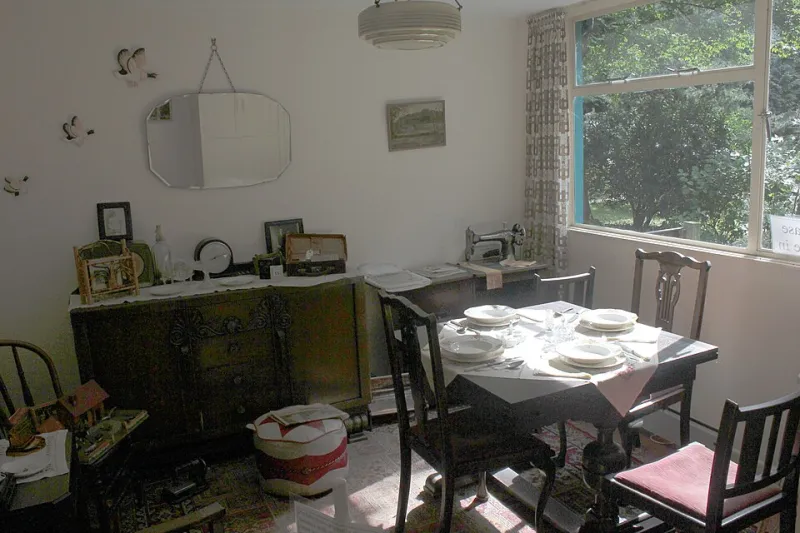
Photo: narrow hallway console table mirror runner uk home interior, via zlccollectibles.com
There is a particular kind of British hallway that tells you everything before you have taken your coat off. A narrow Victorian corridor with a bike against the wall, a pile of post on the floor and a bulb doing its best. Or, at the other end of the spectrum, a new-build entrance so pristine and so bare that it feels less like a welcome and more like a corridor in a hotel you cannot quite afford.
Both are the same problem in different clothes. We decorate the hallway last, if at all. It gets the leftover paint, the spare mirror, the coat hooks that were on offer. And yet it is the first thing a guest sees, the last thing you see before you leave in the morning, and the space that quietly sets the mood for the whole house.
I have started thinking of it as the handshake room. It is where the introduction happens. And introductions, as anyone who has ever been to a slightly awkward dinner party knows, are worth getting right.
The room we use most and style least
Think about the actual traffic. You walk through the hall several times a day. Guests stand in it while you take their coats. Deliveries land there. Shoes, keys, leads, reusable bags and the dog all pass through it. It is the hardest-working square footage in the house and it is almost always the least considered.
Part of this is practical — hallways are awkward. Narrow, dark, short on power sockets, often with a staircase cutting through the middle of them. Part of it is psychological. We treat them as circulation rather than destination, and circulation does not get a mood board.
But a hallway does not need to be a destination to deserve attention. It needs to do three things well: hold the clutter, look after the light, and give you somewhere to put things down. Get those right and the whole house feels calmer.
Narrow Victorian corridors: work with the depth, not the width
If you live in a terrace with a corridor barely wide enough for two people to pass, stop trying to squeeze furniture into it. The trick is to go shallow and go up.
A console table no deeper than 25 to 30 centimetres is the obvious hero here, and wall-mounted versions are better than legs because they free up the floor and make the corridor feel wider than it is. Pair it with a slim mirror above — not because mirrors are a cliché, but because in a dark corridor the reflected light genuinely earns its keep. A round or arched shape softens all those right angles.
Runners are the other great gift to a Victorian hall. A width of around 60 to 70 centimetres leaves a visible strip of floorboard either side, which reads as generous rather than cramped. Choose something with a low pile that can be shaken out and spot-cleaned, because hallways are where the weather happens.
One more thought: resist the urge to line both walls. Leave one side clear so the corridor still feels like a corridor. Negative space in a narrow hall is not wasted space.
New-build entries: add the character the developer forgot
The blank entry is a different puzzle. There is nothing to work with, which is freeing if you approach it with a bit of nerve.
Painting the hall in a single, deeper colour — walls, woodwork, ceiling, the lot — is the fastest way to give a boxy entrance some atmosphere. It also disguises the slightly wobbly plasterwork that new builds often arrive with. Add a bench with storage underneath, a row of proper hooks at a sensible height, and a shelf above for baskets. Suddenly the space has a job.
If the ceiling is high enough, a pendant is your moment. A new-build hall is often the one place you can hang something slightly dramatic without it feeling out of place.
Three layers of light, not one bulb
This is the single change that makes the biggest difference, and the one most often skipped. A hallway lit by one overhead fitting is a hallway that looks flat at every hour of the day.
Aim for three sources. The ceiling light for general brightness, a wall light or pair of sconces for warmth at eye level, and a small lamp on the console for the evening. Warm bulbs throughout — around 2700K — and a dimmer if you can manage it. The difference between a hall that glows and a hall that glares is usually just a bulb and a switch.
A proper landing spot for keys
Every hallway needs a designated place where things land. Not a vague intention to be tidier, but a physical object: a shallow bowl, a small tray, a hook. Somewhere the keys go the moment you walk in.
This sounds trivial and is not. The absence of a landing spot is the reason hallways become chaotic. Give the keys a home and the piles never start.
Baskets, hooks and the gentle art of containment
Boot-room baskets are having a moment for good reason — they contain the mess without pretending it is not there. A woven basket for hats and gloves, a taller one for umbrellas, a shallow tray for shoes by the door. Wicker, seagrass, aged metal, whatever suits the house.
Hooks deserve a mention too. Put them where hands naturally reach, add one at a lower height for children, and choose something with a bit of weight to it. A flimsy hook that bends under a winter coat is a small daily irritation.
Small finishing notes
A runner that can take muddy footprints, a mirror that catches the morning light, a scent you actually like rather than one you tolerate, and — if you have the space — a small chair nobody sits on but everybody notices. Hallways respond beautifully to a little generosity.
Start with the light and the landing spot. They cost very little and change everything. Then let the rest follow, one payday at a time, until the handshake room does the house justice.