Closed Doors, Open Arms: Why the Freestanding Drinks Cabinet Earns Its Place in a 2026 Home

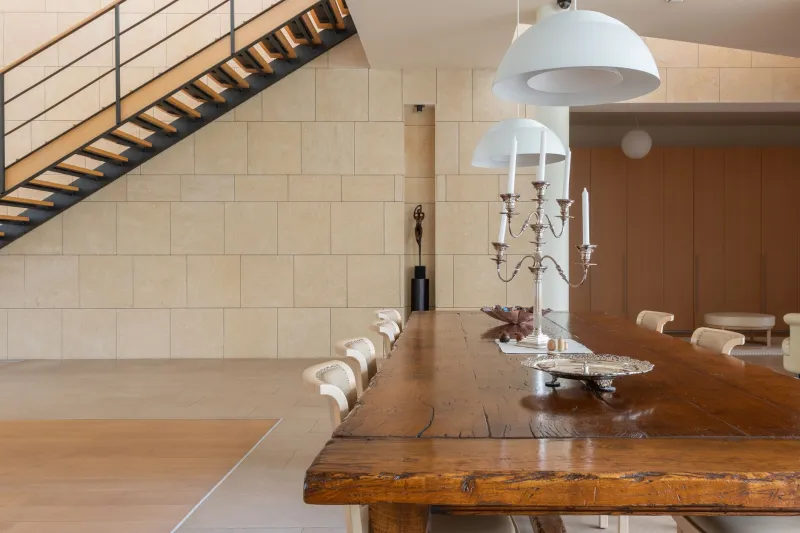
Photo: freestanding vintage drinks cabinet styled in UK dining room interior, via i.pinimg.com
There's a moment, usually around the second week of December or the first warm Saturday of June, when you realise you have nowhere sensible to put the gin, the good glasses and the bottle of something someone brought back from a trip. For a while the answer was a bar cart — brass-framed, rattling, permanently in the way of the sofa. Then it was a shelf above the fridge. In 2026, more of us are quietly going back to the piece that did the job all along: a freestanding drinks cabinet with doors that close.
It makes a certain kind of sense. We've spent a couple of years moving away from the show-home look, softening our rooms with things that have a bit of history and a bit of purpose. A cabinet — perhaps a Victorian mahogany one picked up for a song, perhaps a clean-lined oak design from a British maker — does the same job as a sideboard but with a specific, generous brief: it holds the hosting kit, and it keeps the hosting kit out of sight.
Why It Works Where a Bar Cart Doesn't
A bar cart is a display. It says look at my bottles before anyone has even knocked on the door. A cabinet is quieter than that. It offers a closed frontage to the everyday, and a small performance when you open it — the glasses catching the light, the decanter at the ready, the whole thing laid out like a very well-organised larder.
There's a practical argument too. In a UK dining room that doubles as a home office or a route to the garden, floor space is precious and clutter is contagious. Something with doors means the mess disappears at 5pm. It also survives the damp, dusty business of daily life better than an open shelf, which is worth remembering whether you're in a Cotswold stone cottage or a flat above a shop in Leeds.
The Checks Worth Doing Before You Buy
This is the unglamorous bit, but it's the bit that decides whether the piece becomes a favourite or a problem.
Measure the door swing, not just the width. A cabinet that opens only to 60 degrees is a cabinet you'll have to fight. In a dining room squeezed against a chimney breast or a snug alcove, that matters. Masking-tape the footprint on the floor and open the tape lines to the angle you'd realistically need.
Check the interior, honestly. You want adjustable shelves — tall for bottles, short for glasses — not fixed ledges that only fit the wrong things. A shallow depth of around 35–40cm is usually enough for bottles and tumblers; anything deeper becomes a black hole at the back.
Think about height. Waist-height (roughly 80–90cm) is the sweet spot for making a drink without stooping or balancing. Anything taller is storage, not a serving surface. If you plan to use the top as a little bar during parties, leave it clear — which brings us to placement.
Look at the lining. A cabinet with a wood or painted interior and a decent shelf load will last. If it's going in a warm dining room, check it isn't one of those pieces that smells of the auction house for months afterwards. Airing it in a garage for a fortnight is an old trick that still works.
Where It Belongs, Room by Room
The obvious home is the dining room, and it's a good one. Tucked onto a wall opposite the table, it gives the room an anchor and a useful landing spot for candles, a jug and the plates you don't want on the table yet. Keep it a metre or so from the nearest chair back so nobody's elbow knocks a decanter.
In a living room, a cabinet works brilliantly in an alcove beside a chimney breast, especially if the room is used for drinks before dinner. It lets you keep the TV wall calm and give the hosting kit its own little zone. A low lamp on top, a small tray, and it reads as furniture rather than function.
Don't overlook the snug or a wide hallway. A slim cabinet in a hall gives you a spot for the car keys, a vase of stems and the bottle you'll open later — and it makes a nondescript stretch of wall feel considered. Just keep the door swing clear of the front door's arc.
Styling It Without the Cliché
The temptation is to fill it like a hotel bar: neon signs, cocktail books stacked artfully, a wall of mismatched glassware. Resist. A few well-chosen pieces go much further.
Start with a tray — it corrals bottles and stops the top looking like a jumble sale. A dark wood or lacquer tray on a pale cabinet, or a plain linen runner for a more relaxed feel. Add a decanter and two or three genuinely nice glasses, not a set of twelve nobody uses. A small vase with a single stem or a few dried grasses keeps it from feeling like a drinks trolley in a hotel lobby.
Inside, group by job: apéritifs on the top shelf, spirits in the middle, glassware below. Keep a small bowl for bottle stoppers and a folded cloth for spills. It sounds fussy, but a cabinet that works smoothly is a cabinet you'll actually use on a Tuesday, not just at Christmas.
And leave one shelf a little bit empty. A cabinet with breathing room looks confident; a cabinet packed to the doors looks like a storage problem you're trying to hide.
The Point of It
A drinks cabinet is a small, old-fashioned idea that has become quietly relevant again. It's not about drinking more — it's about being ready. Ready for the neighbour who pops in, the friends who stay for one more, the quiet Friday when a proper glass is the right answer.
Closed doors, open arms. That's a good brief for a piece of furniture in 2026.