The Five-Minute Table: Dressing Your Dining Room for Ordinary Evenings
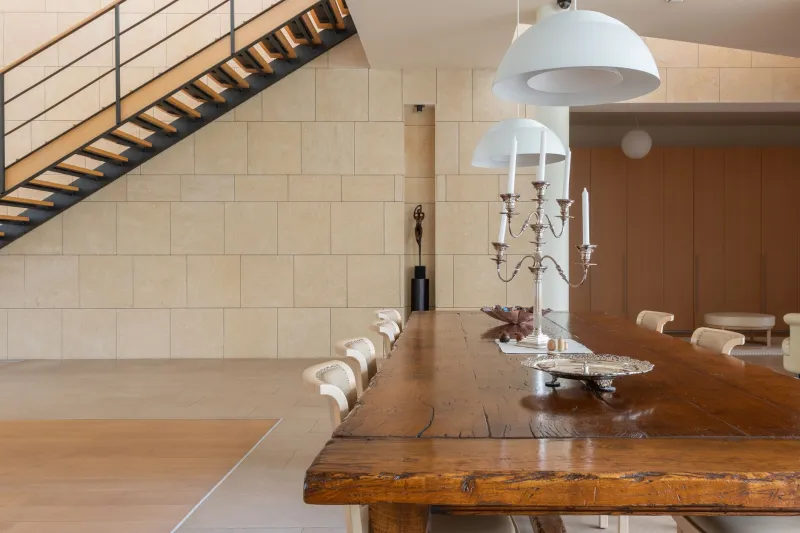
There's a particular kind of quiet that settles over a dining table when it's been left dressed. Not staged, not set for guests — just gently arranged. A runner slightly off-centre, a bowl of clementines, two candlesticks that haven't been lit since Sunday. It says something without saying much: this is a room that's in use, and someone here likes being in it.
Most of us treat the dining table as a stage. It gets dressed for Christmas, for birthdays, for the one dinner party we host a year. The rest of the time it's a landing pad for post, laundry that hasn't made it upstairs, and a laptop. That's a shame, because the table is arguably the most sociable surface in the house — and it doesn't need much to feel ready.
The case for a table that's always on
A laid table is a small, daily act of optimism. It suggests the room is expecting something, even if that something is beans on toast and a half-finished crossword. In smaller UK dining rooms — the sort that double as a study or a route to the garden — that signalling matters. A dressed table makes a multi-purpose room feel intentional rather than transitional.
It's also practical. When the table has a permanent, low-level arrangement, it's easier to clear it back to that baseline after a meal. There's a visual home for the candlesticks and the bowl, so the clear-up has somewhere to end. Compare that with a completely bare table, which somehow attracts clutter like a magnet.
The trick is keeping the arrangement light enough that it never blocks the room's actual uses. Homework, remote work, Sunday lunch, a jigsaw in January — all of these need surface space. The answer isn't to clear everything away each time; it's to build a base layer that's quick to shift to one side.
Start with linen, but keep it relaxed
A runner is the easiest first move. It gives the table a spine without covering the whole surface, and it's far more forgiving than a full tablecloth if you're feeding people who lean on their elbows. In a compact dining room, a runner also draws the eye lengthways, which makes a narrow table feel more generous.
For everyday use, choose a linen or washed cotton in a mid-tone — oatmeal, olive, a soft brick — rather than crisp white, which will show every crumb and demand ironing. Layer a second, narrower runner or a folded cloth over the top if you like the look of mixed textures. The point is softness, not formality.
If you prefer a bare table, a couple of large linen napkins folded loosely at either end can do the same job. They're easier to whisk away when the table needs to become a desk, and they still add that rumpled, lived-in quality that makes a room feel welcoming rather than showroom-perfect.
A low bowl does more than you think
A shallow bowl is the quiet hero of everyday table styling. It holds fruit, nuts, a handful of bulbs in spring, or nothing at all — and it gives the arrangement a centre of gravity. Because it's low, it doesn't interrupt conversation or block the view across the table, which matters in smaller rooms.
Choose something with a bit of texture: a wide ceramic dish in a chalky glaze, a wooden bowl with a visible grain, or a hammered metal piece that catches the light. Keep it roughly a third of the table's width so it doesn't dominate. Fill it with whatever's in season — satsumas in winter, forced hyacinths in early spring, a few apples in autumn — and change it when you think of it. That small seasonal shift is what stops the arrangement feeling static.
Candlesticks: height without heaviness
Candlesticks are the easiest way to add vertical interest without adding bulk. A pair of slim wooden or brass candlesticks, placed off-centre along the runner, creates a soft rhythm across the table. They look just as good unlit during the day, which is the secret to making them work every day.
Avoid anything too tall or too ornate if the room is small — you want the eye to travel along the table, not up to the ceiling. A height of around 25–30cm works well for most UK dining tables, and tapered candles in a muted colour (ecru, sage, a soft terracotta) keep the look calm. If you have children or a cat, consider a pair of low pillar candles in glass holders instead. Less romantic, perhaps, but considerably less likely to end up on the floor.
The compact lamp that changes the room
This is the detail that's most often missed. A small table lamp — a rechargeable one, ideally — placed at one end of the runner or on a sideboard nearby, gives the dining room a warm pool of light that overhead fixtures can't match. It's particularly effective in smaller rooms where a pendant can feel harsh in the evening.
Look for something no taller than 30cm, with a linen or paper shade and a warm bulb. Cordless versions are now widely available and mean you can move the lamp to the kitchen counter when the table is needed for homework. That flexibility is the whole point: the table should feel dressed, not fixed.
The five-minute reset
The arrangement only works if it's easy to undo. Keep a shallow basket or drawer nearby for the linen and candlesticks, so that clearing the table for a work call takes seconds rather than minutes. A good rule is that everything on the table should be movable in one trip — if it isn't, it's too much.
After a meal, the reset is simple: shake out the runner, return the bowl and candlesticks to their spots, and wipe the surface. Five minutes, maybe less. What you're left with is a room that looks cared for, ready for the next ordinary evening — and that's a far more welcoming sight than a perfectly styled table that only appears twice a year.