The Honest Cupboard: Bringing a Freestanding Dresser Back to the Heart of the UK Kitchen
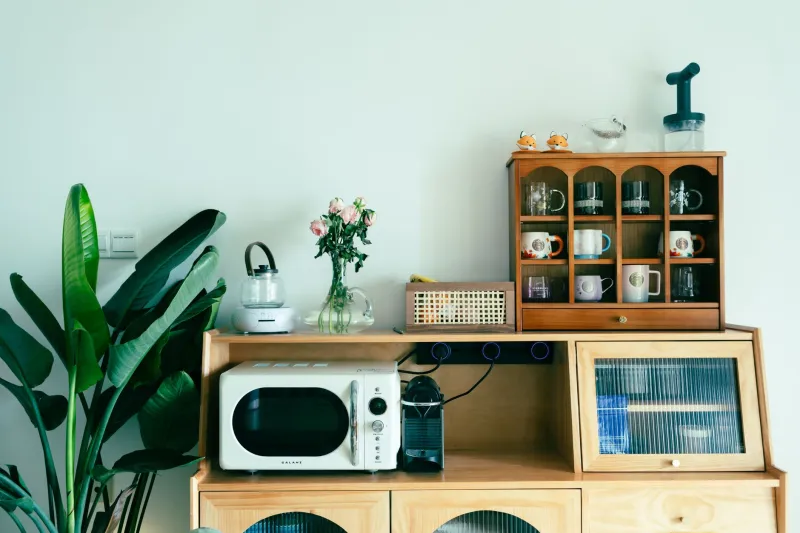
There is a particular sound in a good kitchen. A drawer closing. The kettle coming up to temperature. Someone reaching for a mug while asking where the good mustard lives. Fitted kitchens are brilliant at many things, but they can make all of that feel sealed away behind soft-close doors. The freestanding dresser does the opposite. It is furniture rather than joinery, with a back and legs and a bit of presence, and in 2026 it is finding its way back into the busiest part of the UK home.
Why the dresser earns its place
Wall-to-wall cabinetry is efficient, but it can leave a kitchen feeling a little flat. A dresser adds vertical interest, depth and a useful dose of character without demanding a full renovation. It also does something clever that fitted cupboards rarely manage: it puts everyday life on show in a way that feels warm rather than untidy.
The best versions are not precious. They hold the plates you actually use, the glasses that survive the dishwasher and the linen that gets pressed into service when friends stay for lunch. In a kitchen-diner, a dresser can act as a gentle room divider between cooking and eating. In a small Victorian terrace or a cottage kitchen, a slim antique piece can provide storage where a full run of cabinets would crowd the room. Because it is freestanding, it can move with you, too, which is no small thing in a rental or a home that is still evolving.
Proportions before paint
It is tempting to fall for a colour first, but the shape has to work with the room. Measure the wall, the walkway and the height of nearby windows before you commit. A dresser that blocks the natural route between hob and table will annoy everyone, however beautiful it looks. Leave a comfortable clearance, ideally around 90cm in a busy kitchen, and check that doors and drawers can open fully.
Depth matters as much as width. Traditional dressers can be quite deep, so a shallow base cupboard or an open-shelved version may suit a compact UK kitchen better. Think about sightlines, too. A tall piece on a short wall can make a room feel pinched; a lower dresser or a narrow wall-mounted rack may be the more sociable choice. In period homes, look for pieces that respect the ceiling height and the scale of the fireplace or window. Modern extensions can take something taller and more graphic, but the dresser should still feel like it belongs to the room rather than landing in it.
Paint, finish and a bit of nerve
Paint is where a second-hand dresser becomes your own. You do not have to default to farmhouse cream. Soft sage, clay pink, ochre, a deep green or even a rich burgundy can all work beautifully if they relate to the rest of the room. If the fitted cabinets are pale and calm, the dresser can carry the stronger colour. If the kitchen is already busy, keep the dresser tonal and let the china do the talking.
An eggshell finish is practical for kitchen furniture and gives a softer look than high gloss. Spend time testing sample pots on the actual piece in the actual light; colours shift dramatically between a north-facing kitchen and a sunny dining end. If the timber is sound and attractive, leaving it bare is a valid choice, especially for pine or oak. If the piece is a patchwork of different woods, paint can unify it. Finish with simple hardware: wooden knobs, brass cup hooks, perhaps a slim shelf lip. Avoid over-distressing. A few knocks earned over time are charming; a piece that has been sanded into submission is not.
Styling the everyday china
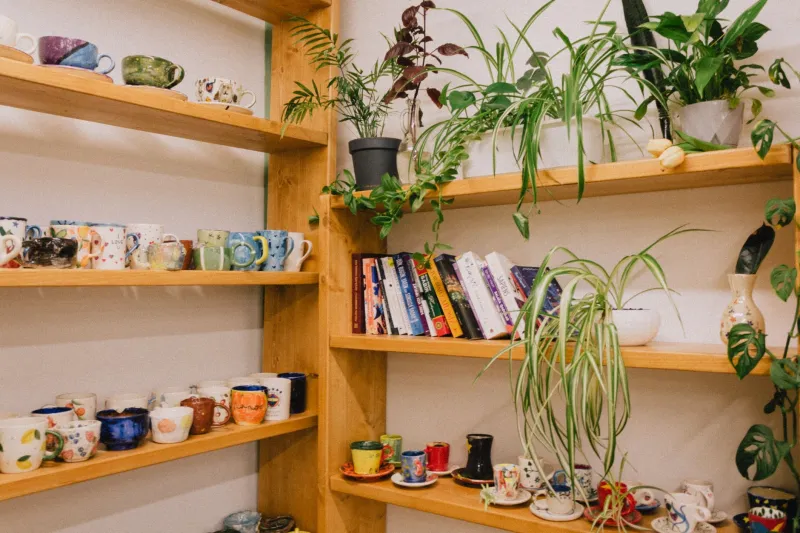
The dresser should look like it belongs to a household, not a heritage display. Start with what you use most: mugs, plates, bowls, serving dishes, glasses and a few folded linens. Mix patterns if you like them, but edit as you go. Stack plates in modest piles rather than towers. Group glasses by type so the shelves read as considered rather than chaotic. Keep the lower cupboard for the less photogenic things: the blender, the spare batteries, the good scissors that always go missing.
A small lamp on the dresser is one of those details that makes a kitchen feel instantly more welcoming. Choose a low-wattage lamp with a warm bulb, and keep the cable tidy and safely routed away from water and heat. A bowl of lemons, a small vase, a candle for November evenings or a single decorative plate can finish the top surface without turning it into a jumble sale. Leave some negative space. The gaps are what stop a dresser from feeling like a warning about clutter.
Sourcing vintage or new
Vintage dressers are plentiful in the UK if you are patient. Auction rooms, salvage yards, charity furniture shops, antique centres and local selling sites all turn up good pieces, from simple pine cupboards to proper Welsh dressers. Check joints, drawer runners, damp smells and signs of woodworm before you part with your money. Measure doorways and stairwells, too; a dresser that will not fit through the front door is a heartbreak waiting to happen.
New pieces are worth considering if you want a specific size or a cleaner finish. British makers and unfinished-pine suppliers offer simple base-and-hutch designs that can be painted to suit the room. Look for solid construction and useful shelf depths rather than decorative fuss. And if you are buying to last, do not overlook the quiet pleasure of a piece that can be repainted in five years without being ripped out.
Keep it sociable, not cluttered
A dresser is a working piece of furniture, so it will gather things. The trick is to decide what it is for. If it is the everyday china cupboard, let it be that. If it is the drinks station, give it a tray and a clear brief. Rotate the display when it starts to feel stale, and be ruthless about the things that have quietly become clutter. In 2026, the most appealing UK kitchens are not the ones that look untouched. They are the ones that look ready for people. A freestanding dresser, honest about its contents and generous with its shelves, is one of the simplest ways to make that happen.