Wet Wellies, Warm Welcome: Styling a Hallway That Can Take the Weather
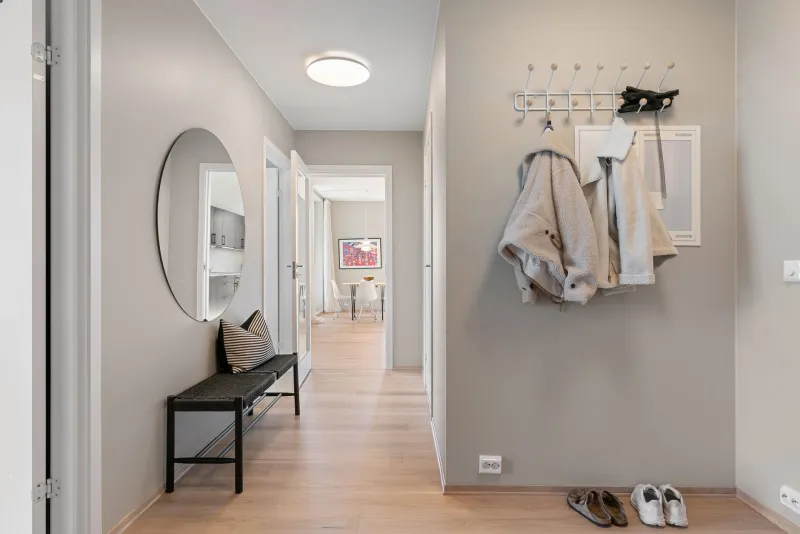
November has a way of announcing itself at the front door. One day the hallway is tidy; the next there is a small landslide of damp coats, muddy trainers, a dog lead and an umbrella that has evidently been weeping quietly in the corner. In a UK home without a utility room or a proper mudroom — which is to say, most of us — wet-weather kit needs a designated landing strip. Not a cupboard. Not a pile. A boot corner.
The point is not to recreate a country-house boot room in 90 centimetres of wall space. It is to give wet things somewhere sensible to go, so the floor stays dry, the coats stop migrating to the banister, and the first thing you see when you come home is a calm little vignette rather than a puddle with ambitions. Here is how to make that corner earn its keep through the darker months.
Start With the Drip Line, Not the Decor
Before you fall for a beautiful bench or a brass hook, look down. Wet boots and umbrellas bring water in, and water always finds the weakest point: the join between floorboards, the edge of a rug, the bottom of the skirting. Start with a drip tray or a shallow boot tray — galvanised metal, powder-coated steel or a sturdy rubber mat with a lip — and place it exactly where boots come off. If your hallway is narrow, a long, slim tray running along the wall is less of a trip hazard than a round bucket shape.
Next, add a washable runner. A low-pile cotton or recycled-fibre runner with a rubber backing is the practical choice: it catches grit, absorbs the first shock of damp and can go straight into the machine when the weather turns truly filthy. Avoid anything pale and precious. This is a working surface, and it should look better for being used.
The Slim Bench That Earns Its Depth
A bench gives the corner its shape. In a narrow UK hallway, depth is the deciding factor. Look for a bench no deeper than 35cm — shallow enough to walk past comfortably, deep enough to perch on while pulling off wellies. Wall-mounted designs are ideal because they leave the floor visually clear and make sweeping underneath easy, though a slim bench on legs with a basket tucked below is equally useful.
A seat height of around 45cm suits most adults, and a slim cushion in a washable fabric or wipeable leather makes the bench feel like furniture rather than utility. If you have children, add a lower peg rail or a small step stool nearby so they can reach their own things without dragging coats down from adult height.
Hooks: Generous, Varied and Within Reach
One of the quiet failures of the average hallway is a single row of hooks at adult shoulder height. It looks neat in a photograph and then collapses under the reality of four coats, two dog leads and a school bag. Instead, plan a small hook system: a main row for adult coats, a lower row for children, and one or two higher hooks for guest coats or a long umbrella.
Five to seven hooks is a sensible number for most family hallways, spaced so that wet coats can hang without touching. Choose solid, load-bearing hooks — cast iron, thick brass or chunky timber pegs — and fix them into a batten or directly into studs. Fiddly decorative hooks that flex under a wet wool coat are a false economy. A simple peg rail, painted the same colour as the wall, keeps the look quiet and considered.
A Proper Home for the Soggy Umbrella
Umbrellas are the awkward guests of the hallway. They are too long for most baskets, too wet for cupboards and too prone to leaving a ring on the floor. A dedicated umbrella stand with a drip tray is the straightforward answer, placed at the end of the bench or just beyond it. Choose one with a weighted base; a tall, top-heavy stand in a narrow hallway is an accident waiting to happen.
If floor space is tight, a wall-mounted umbrella holder or a slim stand tucked beside the door will do the job. Empty it once a week and wipe the tray — standing water and folded fabric are not a good combination. A small absorbent mat underneath is a useful belt-and-braces measure.
The Washable Runner and the Shoe Basket
Shoes multiply. It is a law of domestic physics. A lidded basket or a low, open crate under the bench is a simple way to contain the everyday pairs — the school shoes, the dog-walking trainers, the wellies — without letting them colonise the entire floor. The trick is to limit the basket to what is actually used this week, not every pair the household owns. The rest can live in a bedroom or a cupboard.
Use the runner to define the zone visually. A runner that stops where the boot corner ends sends a quiet message that the hallway has a working area and a welcoming area. It also protects the floor from the worst of the grit, which is no small thing in a British winter.
Narrow-Hall Tactics That Actually Work
In a tight hallway, think vertically and keep the floor line clear. A shallow bench with a shelf above it, a peg rail with a slim picture ledge on top for gloves and post, or a tall, narrow shoe cabinet with hooks on the side can all create useful storage without eating into the walkway. Aim to keep at least 80cm of clear path if you can; less than that and the corner starts to feel like an obstacle course.
A mirror opposite the door will bounce light around and make the space feel less utilitarian, but keep the frame slim. A small lamp or a warm wall light stops the corner feeling like a depot after dark. And if a radiator sits nearby, resist the urge to pile wet coats on top of it — a folding airer or a couple of sturdy hooks further along the wall will dry things more evenly and leave the heat where it belongs.
What to Buy and What to Skip
The pieces worth investing in are unglamorous but reliable: a solid slim bench, a generous peg rail, a galvanised boot tray, a rubber-backed washable runner, a weighted umbrella stand and a lidded basket for shoes. Look to British high-street and heritage names for well-made versions — Garden Trading, John Lewis, Dunelm and Habitat all make sensible, good-looking basics — and spend where the piece takes weight or water.
Skip fabric benches without removable covers, open shoe racks that invite overflow, tiny umbrella stands that tip in a breeze, and any hook that cannot hold a wet winter coat without pulling out of the plaster. The boot corner is not the place for delicate experiments.
The Five-Minute Evening Reset
A boot corner works best with a tiny ritual. At the end of the day, stand boots on the tray, tip any water out of the umbrella stand, straighten the runner, and thin out the hooks so nothing is hanging two-deep. Wipe the bench if it needs it. Five minutes now saves a Saturday morning of scraping dried mud off the floorboards.
Done well, this small corner does more than protect the floor. It gives the hallway a bit of polish, a place for the dog lead and a reason to hang the good coat where you can see it. Wet weather is a fact of UK life; a hallway that looks like it has given up is not. A slim bench, a generous row of hooks and a tray in the right place will do more for the feel of your home than another decorative object ever could.