The Skyward Shelf: A Tall Bookcase That Pulls a Room Together
In a lot of UK living rooms, the furniture hugs the floor. The sofa, the coffee table, the media unit, maybe a low sideboard. It is practical, but it can leave the upper half of the room doing very little. That is where the tall bookcase comes in. In 2026, the most useful statement piece is not always the boldest chair or the biggest lamp. Often it is the vertical piece that gives the eye somewhere to travel and gives the room somewhere to put its things. Think of it as architecture you can move.
A tall bookcase is not simply a storage unit with ambitions. Used well, it can make a small room feel taller, a period room feel more considered and an open-plan corner feel purposeful. The trick is to treat it as furniture first and storage second. That means choosing the right proportions, placing it with care and styling it so the shelves look collected rather than crammed.
Start with the room, not the shelf
Before you fall for a finish or a silhouette, measure the wall, the ceiling and the walkway. A tall bookcase needs breathing room around it, even in a compact UK living room. If it is wedged into a corner with no space to spare, it will read as bulk rather than balance. As a rule, leave at least 15cm between the top of the bookcase and the ceiling if you want a freestanding piece to feel calm. If you are going bespoke, take the shelving closer to the ceiling and let the top become part of the design.
Placement matters as much as size. A tall bookcase can anchor a chimney breast, sit neatly inside an alcove or run along a wall that otherwise feels blank. Avoid putting one directly in front of a window or in the main sightline from the door unless you want it to be the first thing everyone sees. In a living room, the strongest position is often just off-centre: close enough to the sofa to feel useful, far enough away to let the room breathe.
The proportion rule that keeps it polished
Tall does not mean towering. The best bookcases feel intentional, not looming. Look for a depth of around 30cm to 35cm for books and ceramics; deeper shelves invite clutter and eat into floor space. Pay attention to the width, too. A very narrow bookcase can look spindly, while an overly wide one can dominate a small room. A good guide is to choose a piece that fills no more than two-thirds of the wall it sits against, leaving some visual quiet at either side.
If your ceilings are generous, use them. A bookcase that stops well short of the ceiling can leave an awkward gap that looks like a missed opportunity. Either choose a taller model, add a top shelf of display pieces or paint the wall behind in the same colour so the gap feels deliberate. In a period property, a made-to-measure bookcase can be worth the investment because it turns an awkward alcove into a proper feature rather than a place for orphaned boxes.
Alcoves, period rooms and the joy of a perfect fit
UK homes are full of architectural quirks: chimney breasts, alcoves, uneven walls and ceilings that slope in unexpected places. These are not problems to hide. They are opportunities. A tall bookcase built into an alcove can look as though it has always been there, especially if it is painted in the same colour as the surrounding wall. This is the quiet approach: the shelves recede, the objects come forward and the room feels larger.
In a period room, choose materials that respect the architecture. Warm oak, painted timber and simple mouldings tend to sit more comfortably than glossy finishes or heavy industrial frames. That said, contrast can work beautifully. A slim dark metal bookcase against a pale wall brings a modern edge to a Victorian terrace without fighting the original features. The key is to decide whether you want the bookcase to blend in or stand out, then commit to that choice.
Books are the beginning, not the whole story
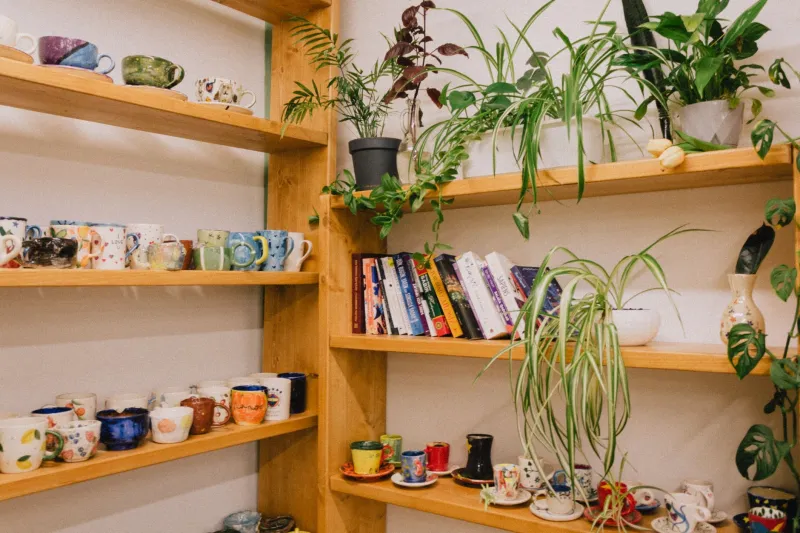
The most inviting open shelving is never just books. It is books plus the things that tell a story: a chipped ceramic jug, a small framed print, a pair of brass candlesticks, a basket for letters. Start by arranging books in a mix of vertical stacks and horizontal piles. Vertical rows are easy to scan; horizontal piles give the eye a rest and can act as a plinth for a favourite object. Do not fill every shelf to the edges. Leave a little negative space so the eye can move.
A simple rhythm helps. On each shelf, aim for one cluster of books, one object with presence and a small gap. Vary the height of what you display and resist the urge to make every shelf match. A framed print leaning at the back of a shelf can add depth, while a single ceramic vessel in a chalky tone can make a whole section feel calmer. If you have a lot of paperbacks, turn some spines inward or group them by colour for a more curated look, but keep it practical. You still need to find the book you want.
Shoppable details that make open shelving feel curated
The right supporting pieces do a lot of quiet work. Look for a tall bookcase with adjustable shelves so you can change the layout as your collection grows. Slim bookends in marble, brass or blackened metal keep rows upright without adding visual noise. A small picture light or a rechargeable wall light can wash the shelves in warm light and make the whole piece feel more considered in the evening.
For styling, think in textures rather than themes. A few ceramic vessels in muted glazes, a small framed photograph, a woven basket for loose bits and a candle or two will take you a long way. Choose objects that look good together but do not match too perfectly. The goal is not a shop display; it is a snapshot of a real home, edited with care. If you are shopping for a bookcase this year, prioritise a finish you love and a size that fits the wall properly. The styling can evolve.
The final check
A tall bookcase is most useful when it does not shout. It should make the room feel more organised, more layered and a little more interesting, without making you worry about dusting every inch. Stand back and ask whether it feels like furniture or storage. If it feels like furniture, with books, art and objects arranged with a light touch, you have got it right. In 2026, the vertical edit is not about filling every shelf. It is about using the height you already have to make the room feel complete.