Small Footprint, Big Welcome: The Case for a Nest of Tables in the UK Lounge
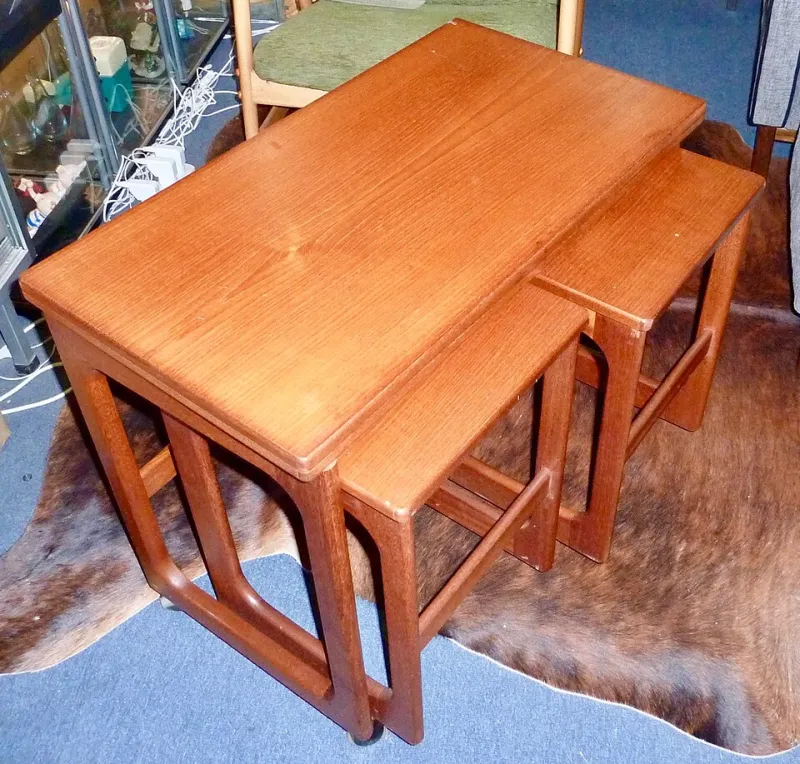
Photo: Tangerineduel, CC BY-SA 4.0, via Wikimedia Commons
There is a particular kind of UK living room maths that no floor plan ever quite captures. The room has to hold a sofa, a lamp, somebody’s abandoned mug, a basket of throws and, on the right evening, four extra people who all need somewhere to put a glass. A single side table can feel like a compromise. A nest of tables feels like a solution.
That is the case for the set rather than the solitary piece. Nested tables are not new, but they are unusually well suited to the way we live now: smaller terraces, rented flats, family lounges that double as playrooms before 8pm and grown-up rooms after. They let you keep the everyday footprint neat and then expand when the doorbell goes. If you have been circling a slim console or a second occasional table, it is worth asking whether three tables in one corner might do more work.
Why the nest earns its keep
The smartest thing about a nest is that it is not really one piece of furniture. It is a small, flexible system. The largest table sits beside the sofa with a lamp, a book and a cup of tea. The middle one tucks underneath, waiting. The smallest one can live on the other side of the room as a plant stand or be carried through to the hallway when you need a landing spot for keys.
Then guests arrive. The set fans out: one table by each armchair, one between the sofa and the window, one holding a bowl of crisps that would otherwise balance on a cushion. Nobody has to rearrange the room. Nothing has to be fetched from upstairs. That is the quiet luxury of it — not a grand gesture, just a room that rises to the occasion.
For UK homes in particular, the appeal is practical. Many of us are working with compact footprints, awkward chimney breasts and a sofa that has to sit closer to the wall than we would like. A nest can slip into the gap beside a bay window, sit lightly next to a narrow fireplace or float beside a slim sofa without blocking the route to the kitchen. It is furniture that respects the walkway.
Choose the right scale before you fall for a finish
It is easy to shop with your eyes first. Try to shop with your sofa first instead. The tallest table in the nest should sit roughly at the height of your sofa arm or just below it — close enough that you can reach a mug without leaning, low enough that it does not crowd the back of the sofa. If the set is much taller than the arm, it will feel like a separate island. If it is much lower, it becomes a display plinth rather than a working table.
Check the nested footprint too. In a small terrace or flat, the set should slide into its corner without jutting into the main walking route. Measure the gap beside the sofa, then take a few centimetres off for skirting boards and curtains. A nest that only just fits will always feel like a hurdle; one with a little breathing space will feel calm.
Shape matters as much as size. Round or softly rounded tables are forgiving in tight rooms because there are no sharp corners to catch a hip as you edge past. Rectangular nests can be excellent in a more formal lounge or beside a long sofa, especially where the set can sit parallel to the wall. Glass tops make a small room feel lighter, while solid wood brings warmth and a sense of permanence. Neither is better — it depends on whether your room needs to feel opened up or grounded.
Finish should relate to the room rather than match it exactly. A pale oak nest warms a room with painted walls and linen upholstery. A smoked-glass set with slim metal legs feels crisp beside a dark sofa. A painted set in soft clay or olive can be a gentle hit of colour without demanding a whole new scheme. If your floor is busy, keep the tables quieter. If the floor is calm, you can afford a little more character above it.
Where to put the set so it works every day
The default position is beside the sofa, but not jammed against the arm. Pull the largest table forward slightly so it sits where a hand naturally falls. The remaining tables should nest underneath with enough clearance that you can slide one out without lifting the whole set. If the nest is stiff or awkward to separate, you will stop using it — and the point is easy flexibility.
In a small flat, try the set as a mini hub between two zones: sofa on one side, dining table or desk on the other. It can hold a lamp and a book in the week, then become a drinks station when friends come over. In a family lounge, place the largest table out of the main toy-traffic lane and keep the smaller ones light enough to move. A tray on top makes it easy to lift cups and small objects out of reach in one go.
Do not overlook the corner beside a chimney breast or the space under a window. A nest can make these awkward pockets useful without making them feel filled. Just leave a clear route around it. The best small-space furniture is the kind you can walk past without thinking about it.
Style the top table without the clutter creep
The top table is where nests either shine or sink. Aim for one clear anchor and one small supporting detail. A slim lamp and a stack of two books is enough. A tray with a candle, a small vase and a coaster is enough. A bowl for keys and a single framed print is enough. The moment you add three candles, four ornaments and a pile of post, the table stops being useful.
A tray is your friend because it corrals the small stuff and makes it easy to lift off when you need the surface for a drink. Keep the tallest object at the back, nearest the wall, and leave the front edge clear. If the table is round, work in a loose triangle rather than a line. If it is rectangular, give the surface a little asymmetry — a lamp at one end, a book and a small dish at the other — so it does not look staged.
And rotate. The beauty of a nest is that the top table does not have to carry everything. Move the smallest table to the hallway for a week, use the middle one as a bedside table in the spare room, bring them back when you need them. Furniture that can travel through the house is furniture that earns its place.
A polished little edit
For a warm, lived-in look, consider a set of three rounded oak tables with a low sheen and softly tapered legs. They will sit happily beside a linen sofa and grow more characterful with age. For a crisper city flat, look for a slim nest in blackened metal with smoked glass tops — visually light, easy to wipe, and smart enough for a drinks tray. For a family lounge, a painted set in a soft olive or clay finish is forgiving, cheerful and less precious than pale wood. And for a small terrace where every centimetre counts, a narrow rectangular nest that slides into the gap beside the chimney breast can be the difference between a room that works and a room that merely looks nice.
A nest of tables will not transform a room on its own. But it will make the room more usable, more sociable and more forgiving of real life. In a UK living room, that is a very smart buy indeed.